
By: Thom Fain
Why Japan Failed at Growth (and Succeeded at Everything Else)
The Japanese bond market, like with the value of the yen vs. dollar, has been all over the news… and it got me thinking. Since landing in Tokyo over two years ago, I’ve kept on hearing Japan’s economy has been “failing” for thirty years—and yet somehow, the average person here can afford fresh sushi, handmade jewelry, and a decent apartment without working three jobs or developing a stress-induced ulcer.
Meanwhile, America’s economy has been “succeeding” for those same thirty years, and a Starbucks latte now costs what a full meal used to. The buzzword I’ve seen tossed around in the years since moving from the country, I believe, is affordability.
Of course not many Americans born after the Reagan Administration can afford a house, and American shopping malls look like set pieces from a post-apocalyptic film where the zombies got bored and left. The Duffer Brothers set an entire season of Stranger Things in a thriving 1980s shopping mall, and the scariest thing about it wasn’t the interdimensional monster—it was that the food court was full.
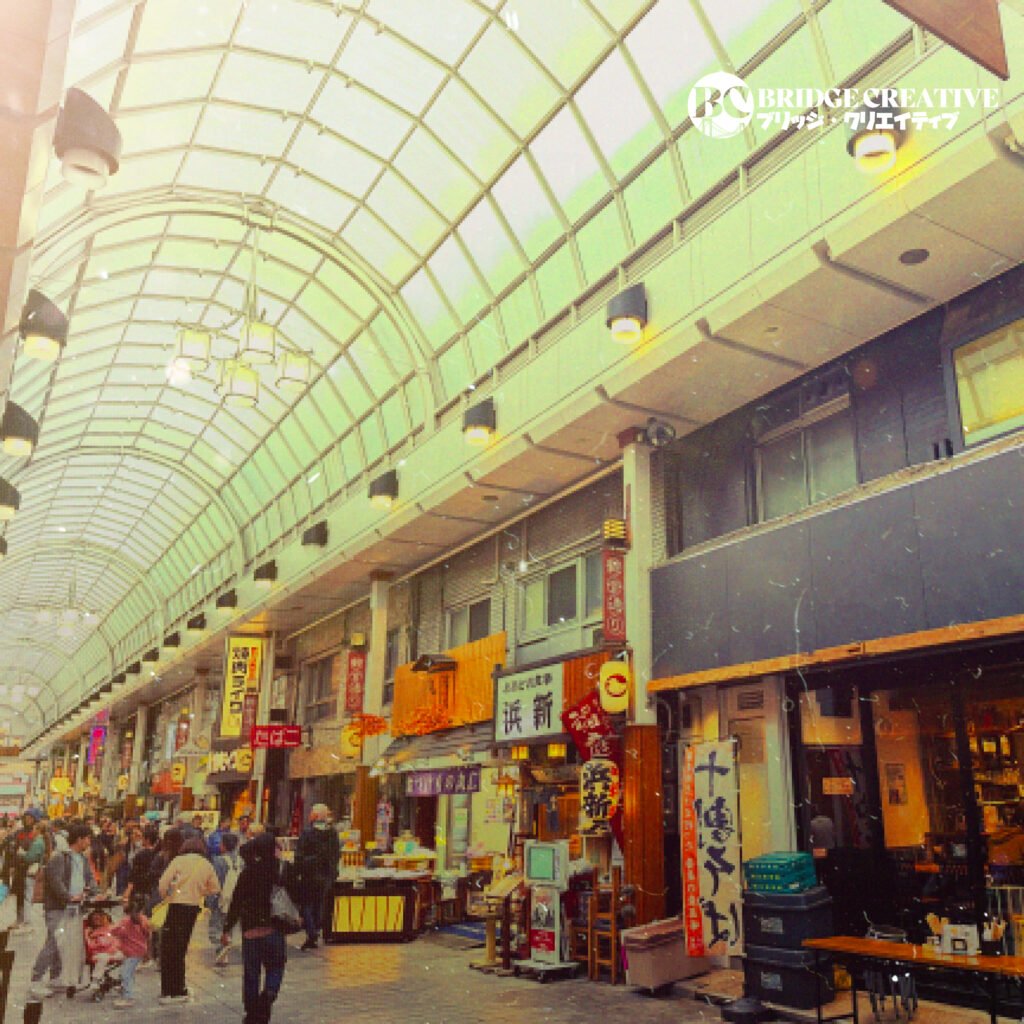
art direction by Bridge Creative Tokyo
This contradiction says everything about how we’ve been measuring the wrong things, and doing so for a very long time.
The traditional economic narrative goes like this: Japan’s asset bubble burst in 1990, leading to decades of stagnation, deflation, and near-zero growth. This is presented as a cautionary tale, a warning about what happens when an economy stops expanding. Economists use phrases like “lost decades” with the kind of somber concern usually reserved for discussing terminal illness. The implication is clear: Japan failed, and the West should never become Japan.
But here’s what that narrative misses entirely: while Japan’s economy was busy “failing,” it somehow maintained a society where a convenience store worker can afford to live in Tokyo, where fresh bread and cocktails cost a fraction of what they do in American cities, and where shopping malls remain vibrant community hubs instead of empty monuments to consumer culture’s corpse. Japan’s great failure, it turns out, was creating a stable society where ordinary people can afford ordinary pleasures like bread & roses—without assuming crushing debt or working themselves into early graves.
America’s great ‘success’, by contrast, has been the exact opposite.
The Mall as Diagnostic Tool
Shopping malls are perfect cultural barometers because they exist at the intersection of capitalism, community, and everyday life. They’re where theory meets reality, where economic systems reveal their actual relationship with human beings.
In Japan, malls are thriving. Not because Japan solved inequality (it hasn’t) or because wages are high (they’re not by international standards), but because the malls are designed around a crucial assumption: that regular people with regular jobs should be able to show up and participate without budgeting for it like it’s a special occasion. A Japanese mall integrates seamlessly with public transit, offers everything from cheap food courts to high-end restaurants, includes practical services like pharmacies and clinics, and generally operates on the premise that shopping is a social activity, not just a transaction. It’s built into the fabric of daily life.
American malls, meanwhile, were constructed on an entirely different set of assumptions: that Americans would drive everywhere, that anchor department stores would remain dominant forever, that suburbs would keep sprawling outward indefinitely, and most importantly, that a broad middle class would have discretionary income to spend on discretionary purchases.
When those assumptions collapsed—especially that last one—the malls collapsed with them.
Between 2017 and 2022, the number of U.S. malls declined by about 3 percent per year. Some projections suggest that up to 87 percent of large shopping malls could close over the next decade. Of course Amazon changed consumer preferences, probably permanently. But I guess I’m nostalgic for a time in my youth where things were more like Japan, when the economic foundation these malls were built upon made my home country seem exceptional.
The Stagnation Paradox
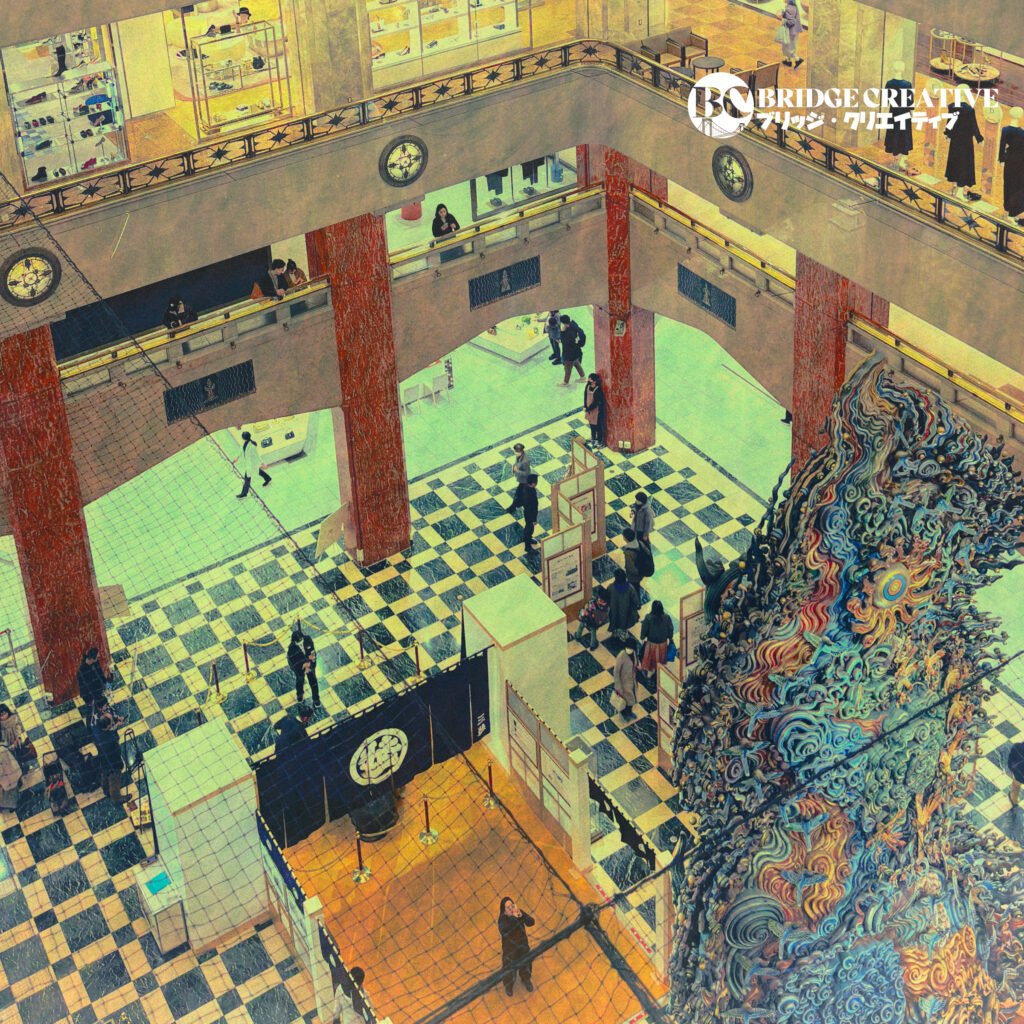
art direction by Bridge Creative Tokyo
Here’s the part that breaks conventional economic thinking: Japan’s stagnation has been a feature, not a bug, for regular people’s quality of life.
When wages don’t rise but prices don’t rise either, you get stability. When commercial real estate doesn’t inflate beyond all reason, small businesses can survive. When companies aren’t strip-mined by private equity for quarterly returns, they maintain employment. When the cost of housing remains relatively flat for decades, people can actually afford places to live without dedicating 60 percent of their income to rent.
Japan’s “lost decades” meant that a bowl of ramen in 2026 costs roughly what it did in 1996. A train ticket costs roughly the same. An apartment, adjusted for specifics, costs more. This is what economists in America call “failure,” but I call it smart.
Meanwhile back home, we had “growth.” Except that growth meant housing prices that quintupled (while wages stagnated, Healthcare costs that became genuinely ruinous, Education that requires taking on mortgage-level debt for a bachelor’s degree, grocery bills that doubled (while corporations posted record profits) and commercial real estate costs locking out independent businesses in favor of big box stores with sufficient capital (and cheap products).
So, the American economy grew tremendously. The question nobody except for Elizabeth Warren wants to ask too directly is… for whom?
The Financialization of Everything
The core difference I’ve been journaling about isn’t really about Japan vs. USA in some sort of competition over economics. It’s just an observation about what happens when an economy optimizes for capital returns and quarterly growth rather than adapting to downturns while keeping social stability front-and-center through monetary and fiscal policies.
American capitalism spent the past forty years financializing everything. We turned housing into an investment vehicle, education into a debt instrument, healthcare into a profit center, and companies into vehicles for extracting short-term value. Private equity firms perfected the art of buying businesses, loading them with debt, extracting maximum value, and discarding the husk. Venture capital optimized for “disruption” that mostly meant undermining labor protections and externalizing costs.
This produced amazing GDP growth and spectacular returns for people who owned assets. It also produced a society where a huge percentage of the population lives paycheck to paycheck, where basic middle-class stability feels like a luxury, and where the entire cultural conversation is dominated by social status.
Japan, by contrast, maintained a system that—while far from perfect—still operates on the assumption that companies should employ people, that work should provide a livable wage, and that ordinary people should be able to access ordinary pleasures. The Japanese system has plenty of problems: irregular employment, hidden poverty, demographic challenges, unequal treatment among men and women in the workforce.
But it didn’t optimize itself into a configuration where only the top 20 percent can comfortably participate in society.
What the Cocktail Costs
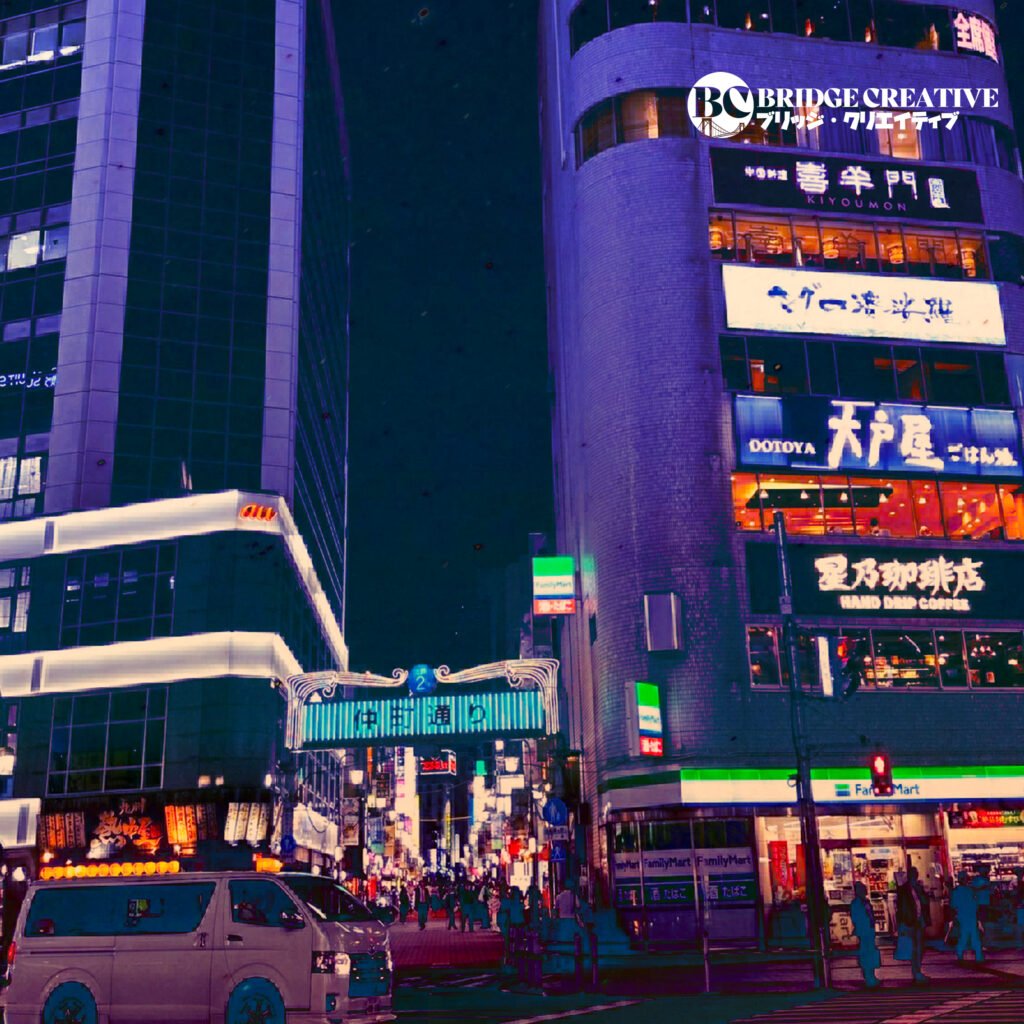
art direction by Bridge Creative Tokyo
There’s a moment in conversations about international economics where someone inevitably says, “But you have to adjust for purchasing power parity” or “The statistics show…” This is the moment where abstract analysis disconnects from lived experience.
Here’s lived experience: In Tokyo, a well-made cocktail at a decent bar costs maybe $7-8. In previous cities I’ve lived like San Francisco, Seattle, or LA, that same cocktail costs $18-22 before tip. Fresh bread from a neighborhood bakery in Japan? A few dollars. In an American city? If you can even find a neighborhood bakery that hasn’t been priced out by commercial rent increases, you’re paying $8 for a loaf.
After two years abroad, I’ve just come to appreciate the fundamental relationships Japanese people have developed toward work, money, and life.
In Japan, even people in “low-income” jobs can afford small luxuries regularly. They can get fresh sushi, buy handmade goods, go out for drinks. These aren’t special occasion purchases requiring careful budgeting. They’re just… life.
In America, we’ve created a situation where people making $60,000 a year in major cities feel poor. Because by any meaningful standard of being able to afford housing, healthcare, food, and occasional enjoyment, they are poor. The goal posts moved. The dream became unreachable. And we’re told this represents economic success.
The Metrics We Chose
Part of the problem is that we’ve been measuring the wrong things and calling those measurements “the economy.”
GDP growth sounds good. Stock market performance sounds good. Rising real estate values sound good. But these metrics can all improve while regular people’s lives deteriorate. In fact, they often improve because regular people’s lives are deteriorating—because wages are suppressed, because housing has become unaffordable (which increases GDP!), because people are going into debt for basic necessities (which shows up as economic activity!).
Japan’s stagnant GDP looks like failure in these terms. But if you measure by “Can a regular person afford a decent life?” the picture inverts entirely. The purchasing power of ordinary wages, the accessibility of daily pleasures, the stability of employment, the functionality of public goods—by these metrics, Japan’s “failure” looks suspiciously like success.
It all suggests we’ve been having the wrong argument for decades. The question isn’t “How do we generate more growth?” The question is “Growth for whom, and at what cost to everyone else?”
The Free Market That Works
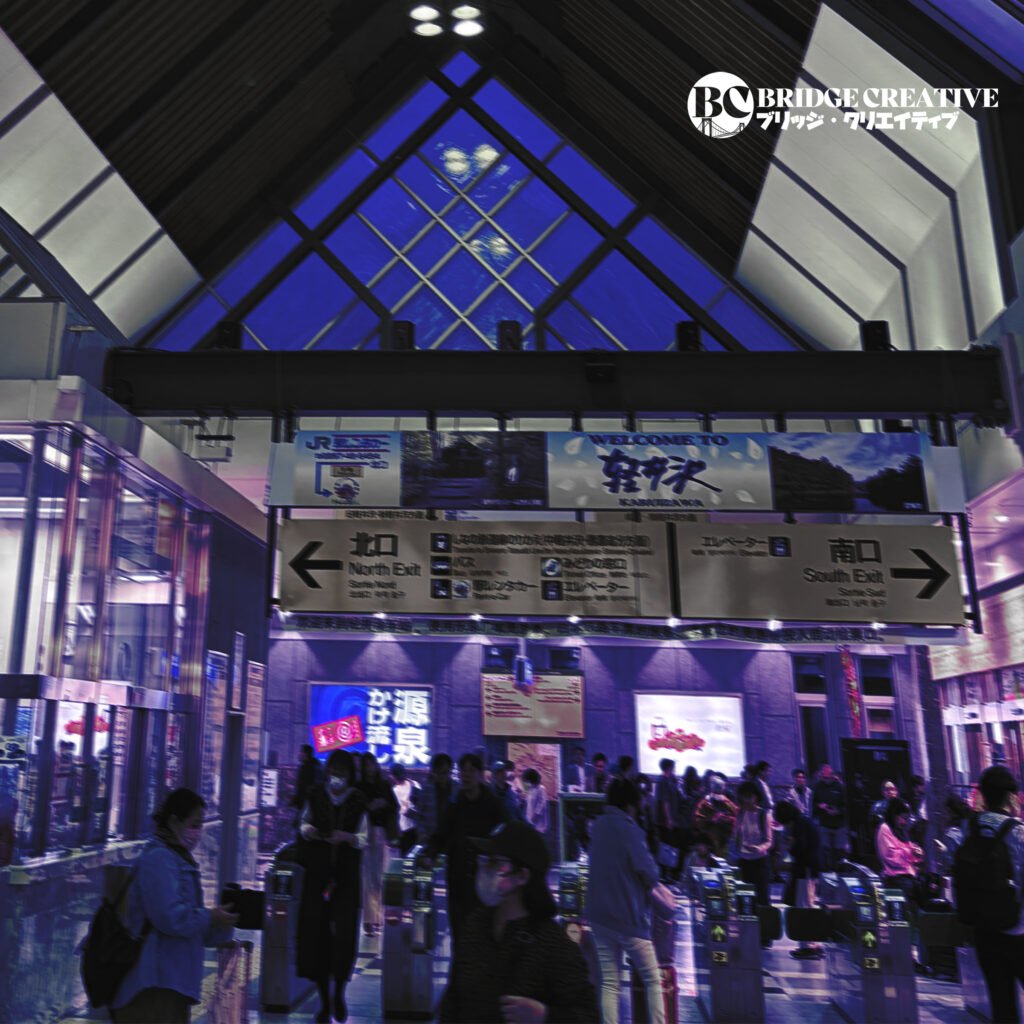
art direction by Bridge Creative Tokyo
There’s an irony here that should make ideological purists uncomfortable: Japan’s market economy works better for regular people than America’s does, despite (or because of) maintaining structures that American free-market advocates would criticize as insufficiently dynamic.
Small businesses can compete because they aren’t immediately priced out of existence. Workers have more stability even if they have less potential upside. Competition exists but isn’t purely predatory. The market serves people rather than people serving the market.
America’s version of the free market, meanwhile, has produced spectacular efficiency at generating returns for capital and spectacular dysfunction at providing decent lives for labor. We’ve optimized everything beautifully, just not for human flourishing.
The Mall Tells the Truth
Japanese malls thrive because they serve populations that can afford to participate. American malls die because they were built for a middle class that largely no longer exists in the same form. You can’t sustain retail infrastructure designed for broad-based consumer spending when consumer spending power has been concentrated into a narrow band at the top.
The vaporwave aesthetic of dead American malls—that eerie nostalgia for a future that never arrived—is really nostalgia for an economic arrangement that’s been systematically dismantled. Those empty corridors and dark storefronts represent something more than changing shopping habits. They’re monuments to a choice we made, collectively and often unconsciously, to optimize our economy for growth rather than for people.
Japan made different choices, or perhaps failed to make American-style choices, and ended up with stagnation. Terrible, stable, livable stagnation where people can afford bread and cocktails and apartments.
Maybe we’ve been using the wrong definitions all along. Maybe failure and success are more complicated than GDP charts suggest. Maybe an economy that doesn’t grow but allows people to live decent lives is succeeding at something more important than an economy that grows spectacularly while leaving most people behind.
Or maybe we’ve known this all along, but found it easier to keep measuring the wrong things than to confront what the right measurements would reveal.
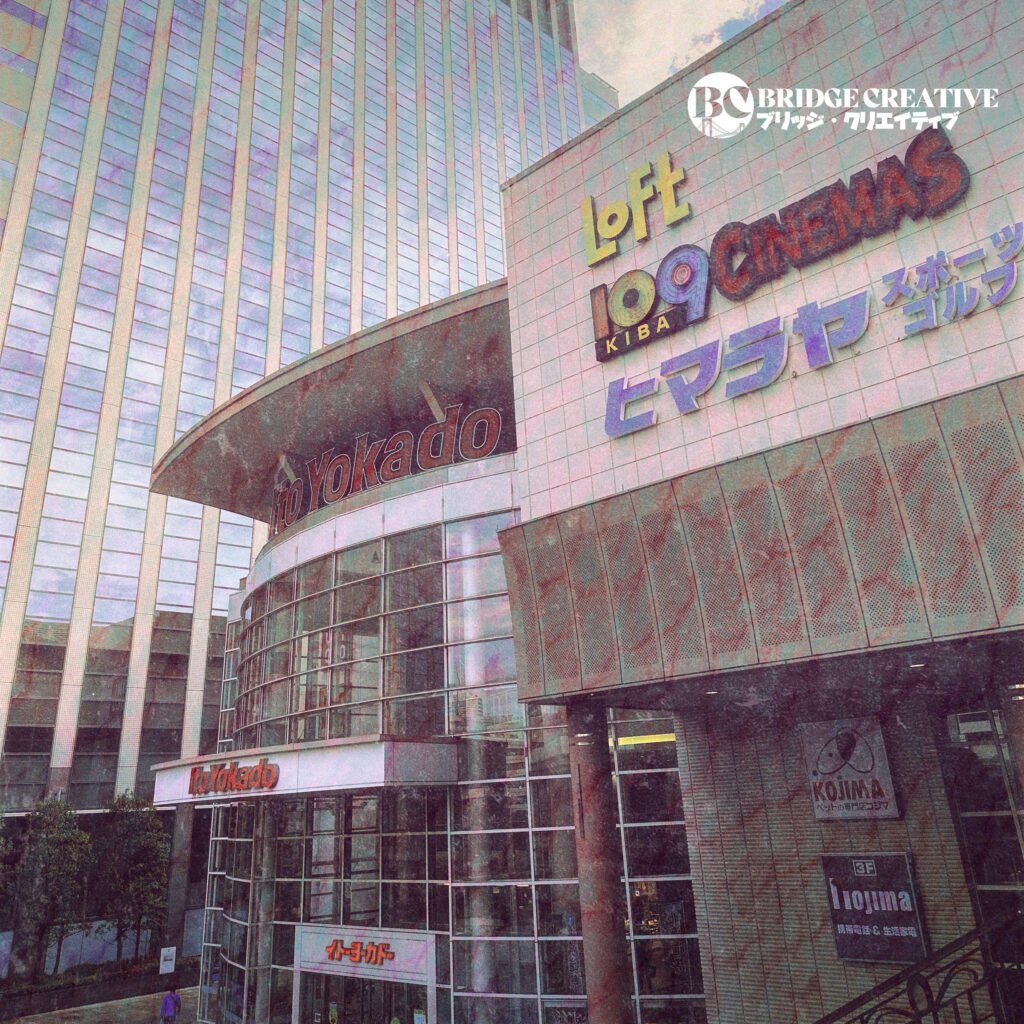
art direction by Bridge Creative Tokyo